Teams often replace their risk workflow tools after discovering that audit logs cannot be produced in under an hour.
The gap usually appears when policy updates must be linked directly to every control without manual re-entry. This article spells out the four features that close that gap, ranks the platforms that supply them, and names the single option that satisfies all four at once.
What to Look For in Workflow Automation Tools for Risk Assessment
Selecting workflow automation tools for risk assessment requires evaluating specific capabilities that directly impact operational risk, compliance, and audit readiness.
Organizations need solutions that can handle complex risk frameworks while maintaining clear documentation throughout the assessment process. The right tool should support both structured and unstructured risk data across multiple departments.
Five must-have criteria separate effective workflow automation platforms from basic task management systems.
Automated risk identification via process mapping allows teams to visualize workflows and spot potential vulnerabilities before they become issues. This feature creates visual representations of business processes that highlight control points and decision gates.
Process mapping helps teams understand how risks flow through different stages of operations. It reveals dependencies between tasks that might not be obvious in traditional risk registers.
Configurable risk scoring and risk matrix templates enable customization based on your organization's specific risk appetite and tolerance levels. Different industries require different scoring methodologies and matrix structures.
These templates should adapt to your existing risk framework without forcing major changes to established practices. Flexibility in scoring criteria ensures the tool grows with your risk management maturity.
Real-time risk monitoring and risk alerts provide immediate notification when risk indicators exceed defined thresholds. Continuous monitoring catches emerging threats before they escalate into significant incidents.
Alert systems should route notifications to the appropriate risk owners based on severity and category. This ensures quick response times and maintains accountability throughout the risk management process.
Policy enforcement with audit trails creates documented evidence of compliance activities and control effectiveness. Every risk assessment action should be logged with timestamps, user identification, and outcome details.
Audit trails support regulatory requirements and provide the documentation needed during external reviews. This capability becomes essential when demonstrating governance practices to stakeholders.
Integration with existing risk registers and dashboards ensures your workflow automation tool connects with current systems rather than creating data silos. Seamless data flow maintains consistency across risk reporting and analysis tools.
Integration capabilities reduce manual data entry and minimize errors that occur when transferring information between platforms. This connection supports comprehensive risk reporting across the entire organization.
1. Process Street - Best Overall
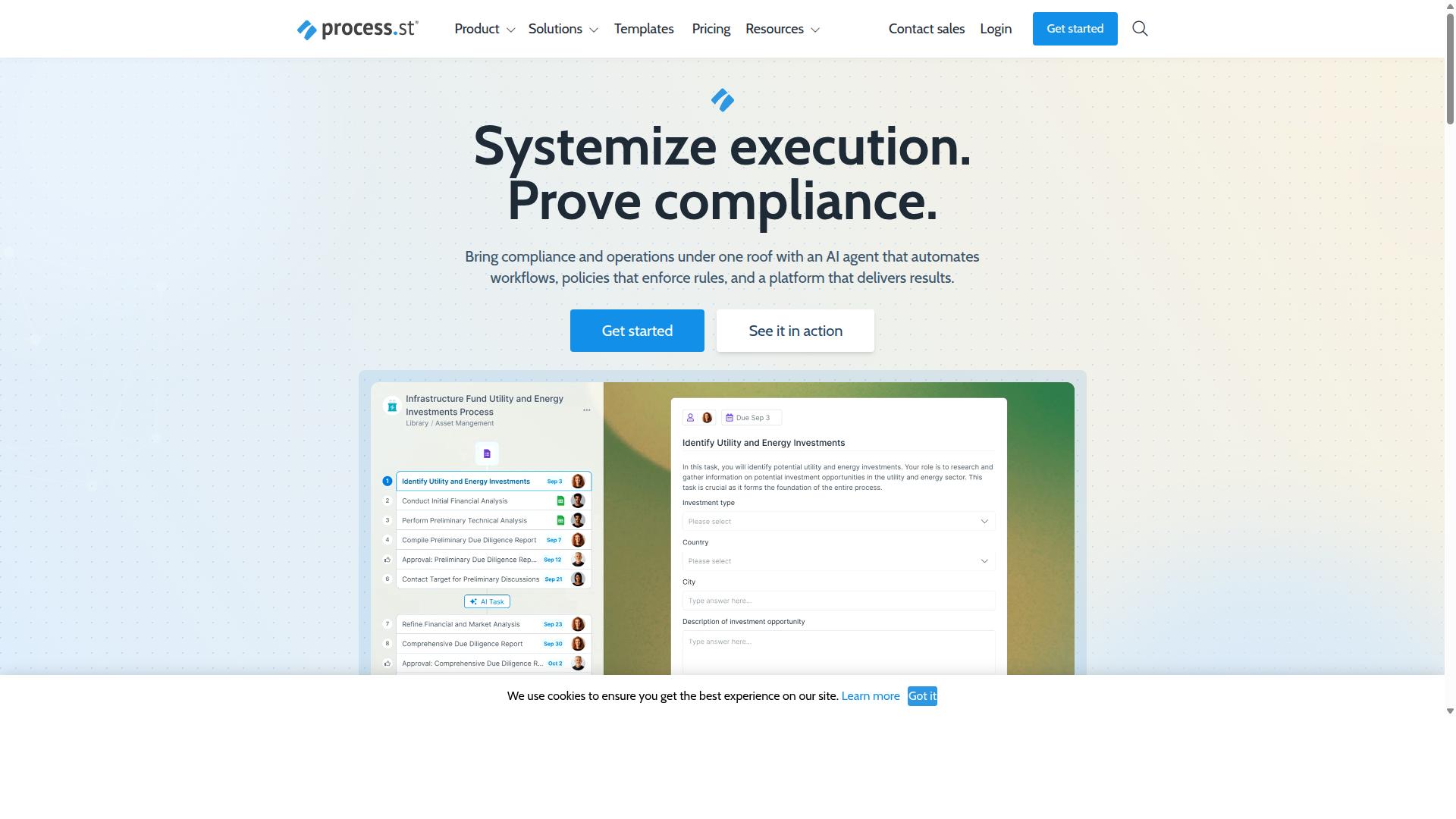
Process Street combines process automation with governance features to help teams standardize risk assessment workflows across compliance-heavy operations.
Three distinct products work together to create a complete risk management system. Ops handles workflow automation and process orchestration. Docs manages document control and policy enforcement. Cora serves as an AI compliance agent that monitors regulations and flags risks.
These components address different aspects of risk assessment. Ops converts static procedures into active workflows. Docs maintains audit-ready documentation. Cora provides continuous risk monitoring through artificial intelligence.
Core Risk Assessment Features
Process Street's Ops product turns static risk procedures into live, trackable workflows that automatically assign risk owners and set risk thresholds.
Conditional logic helps teams automate risk identification based on specific conditions and outcomes. Risk scoring formulas calculate risk levels as data enters the system. Dynamic risk matrices update automatically when new information becomes available.
Risk register updates occur when tasks reach completion, ensuring the latest risk data stays current. This automation reduces manual entry errors and keeps risk information consistent across the organization.
Compliance and Audit Capabilities
Docs feature provides policy control and document governance aligned with ISO 9001, SOC 2, SOX, and FDA standards.
Version control tracks all policy changes with timestamps and author details. Audit-ready proof stores automatically as workflows complete each step. Control testing generates time-stamped evidence that satisfies both internal and external audit requirements.
These governance features ensure organizations maintain compliance documentation without additional manual effort. Policy enforcement happens through the workflow system itself.
AI-Powered Risk Monitoring
Process Street's AI layer converts workflow data into risk metrics and predictive indicators that surface anomalies before they escalate.
Cora monitors incoming workflow data to identify missed risk controls. The system predicts when risk thresholds may be breached based on current patterns. Auto-generated risk reports compile relevant metrics for ongoing monitoring activities.
This approach allows teams to maintain continuous oversight without constant manual review. Risk alerts trigger when the AI detects potential issues in the workflow data.
2. LogicGate Risk Cloud
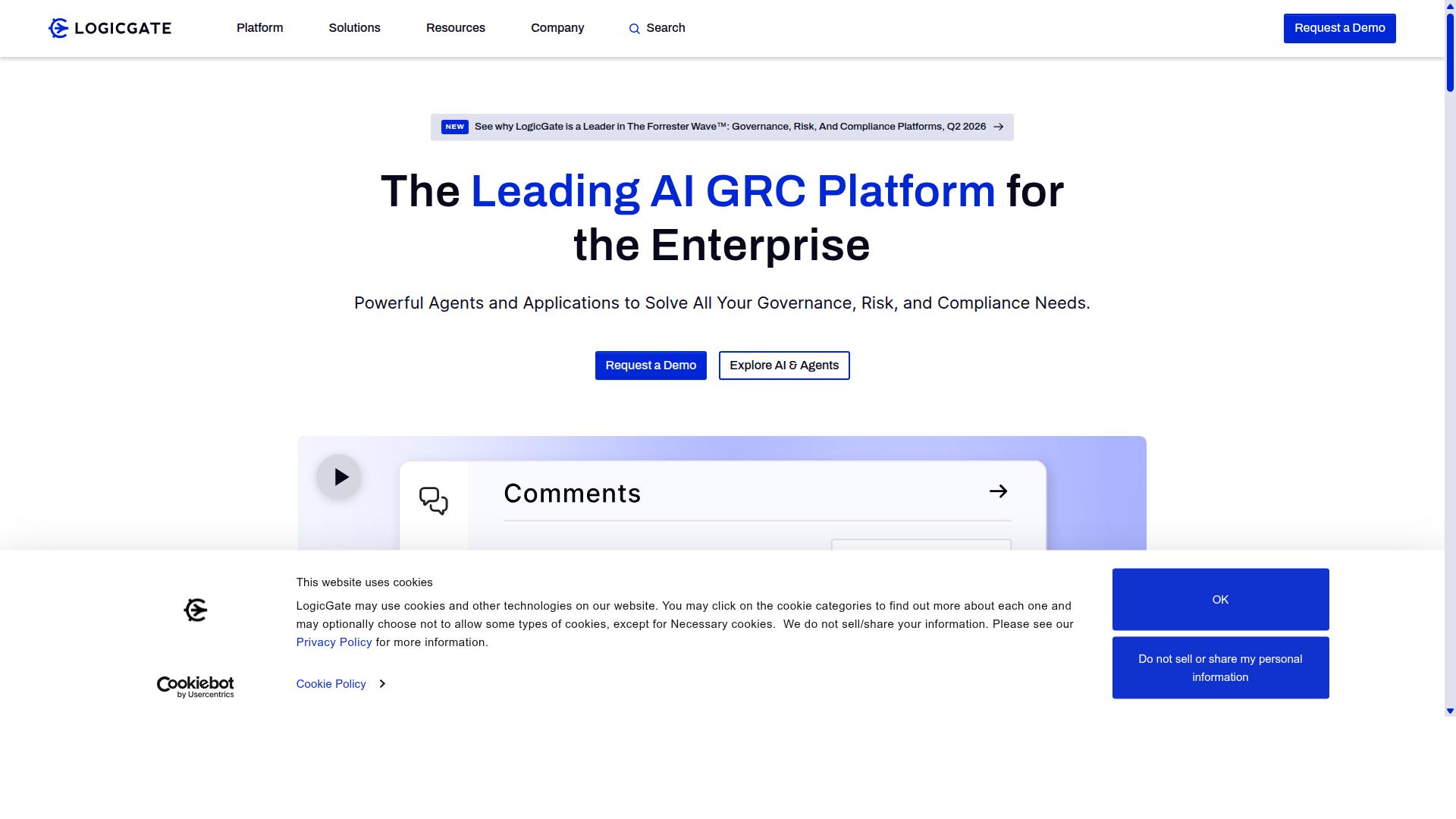
LogicGate Risk Cloud focuses on building configurable risk frameworks that adapt to various regulatory environments. The platform helps organizations establish structured workflows for risk assessment and compliance tracking. Users benefit from drag-and-drop design tools that simplify process mapping across departments.
Real-time dashboards provide visibility into risk metrics and compliance status. Automated notifications keep risk owners informed about pending tasks and threshold breaches. Audit trails maintain complete records of every workflow change and decision point.
Integration capabilities allow connections with existing systems without major infrastructure changes. The platform supports organizations that need consistent risk management across multiple regulatory requirements. Customizable risk assessments help teams evaluate threats based on their specific operational context.
Risk Framework and Automation
Users can design risk treatment plans that align with internal risk appetite statements and external regulatory requirements. The configuration process begins with establishing risk appetite rules that define acceptable risk tolerance levels. These rules then guide automated decision-making throughout the workflow.
Risk treatment workflows move through predefined stages based on assessment results and control effectiveness. Each stage includes task assignments, approval gates, and documentation requirements. The system tracks progress and escalates items that exceed defined risk thresholds.
Compliance obligations connect directly to risk controls through mapped relationships. When regulations change, the platform updates related workflow requirements automatically. This approach ensures that risk mitigation efforts stay synchronized with evolving regulatory expectations across different jurisdictions.
3. Onspring
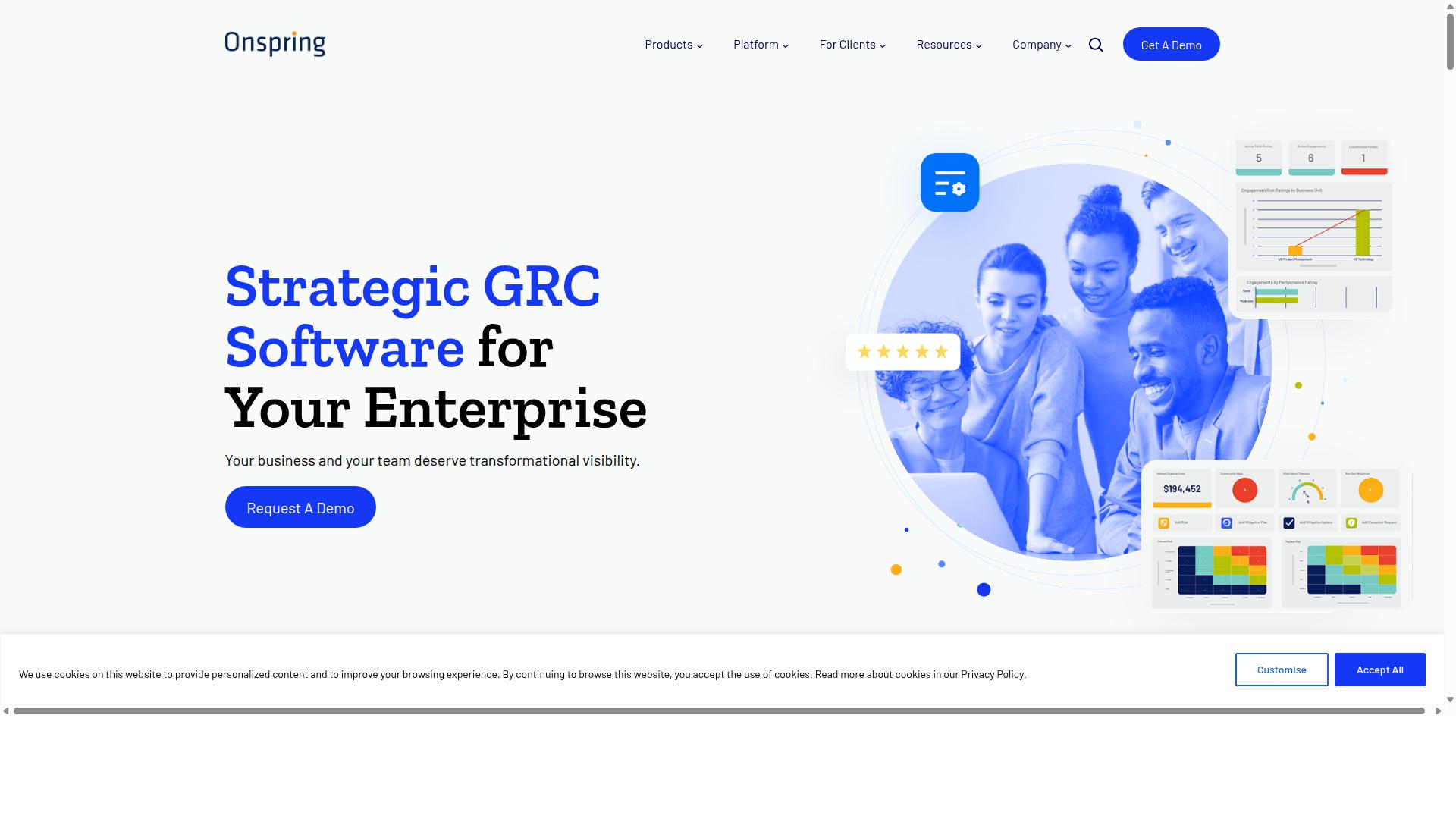
Onspring offers an integrated GRC platform that connects risk workflows with audit and compliance modules.
Teams can coordinate across departments using shared dashboards and common data sources. This approach reduces data silos that often slow down risk management efforts.
The platform supports process mapping across different business units while maintaining consistent risk controls. Users can assign risk owners and track accountability through structured workflows.
Cross-departmental collaboration improves when risk data flows automatically between governance, compliance, and operational teams. This helps organizations maintain unified risk frameworks across multiple functions.
Integrated Risk Workflows
Onspring automates risk mitigation tasks while linking risk analysis outputs to real-time risk reporting dashboards.
Workflow triggers activate when risk scores exceed defined thresholds. These triggers can initiate mitigation actions such as control testing or policy enforcement procedures.
The system connects risk identification activities with ongoing risk monitoring processes. This creates continuous visibility into how identified risks evolve over time.
Reporting capabilities update automatically as new data enters the system. Risk dashboards display current risk metrics and indicators for quick decision making.
Organizations can track risk treatment progress through structured workflows that connect risk owners with required actions. This approach supports consistent risk evaluation across different business areas.
4. Scrut Automation
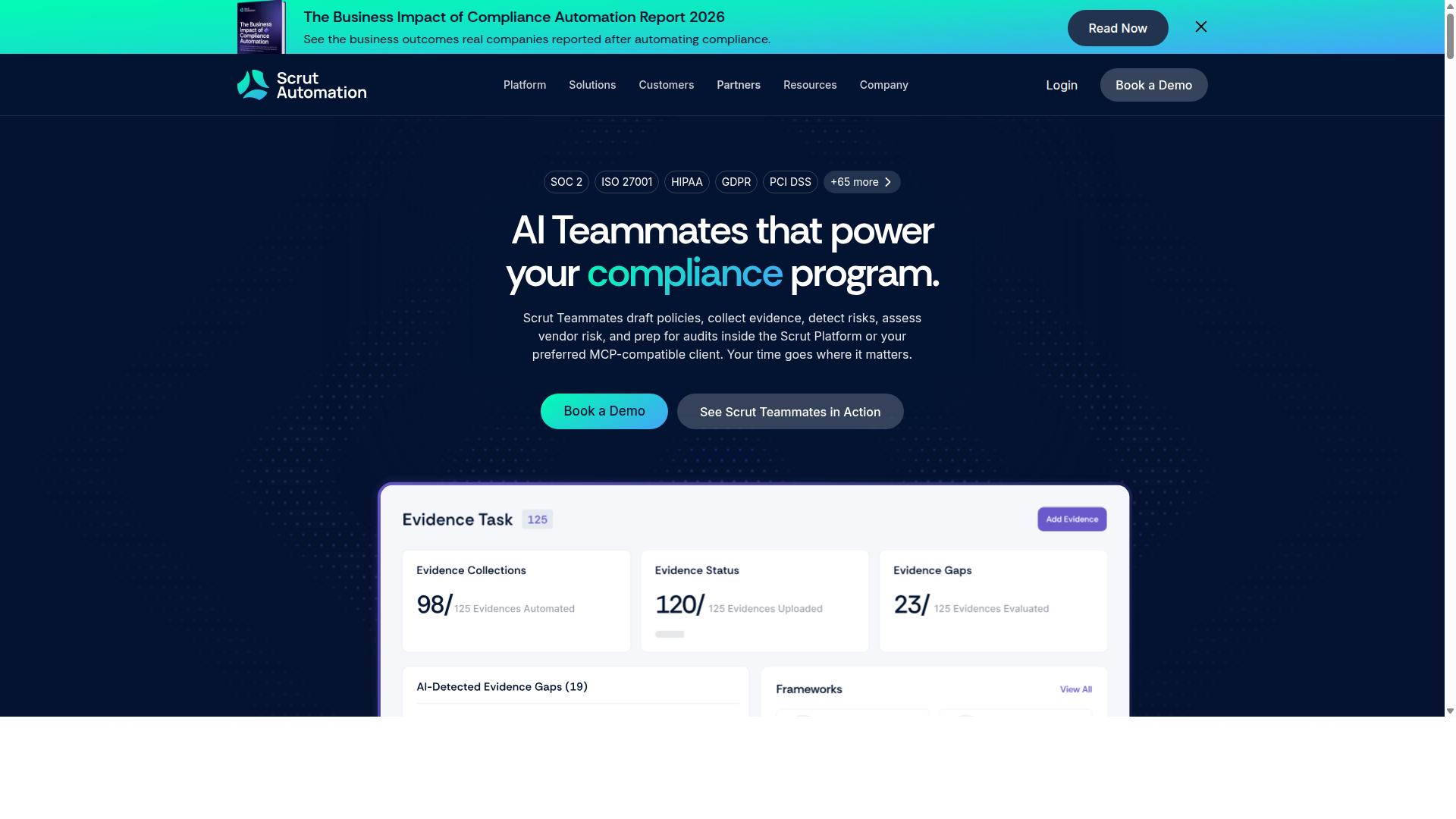
Scrut Automation specializes in continuous risk monitoring through automated evidence collection and control checks. This approach supports teams that need ongoing visibility into their risk posture across multiple compliance frameworks. The platform handles risk assessment tasks through automated workflows that gather evidence and verify control status without requiring constant manual input.
Teams benefit from this continuous approach because it reduces the gaps that occur between periodic reviews. Workflow automation keeps risk indicators current rather than relying on snapshot assessments that quickly become outdated. Organizations gain the ability to track compliance status across SOC 2, ISO 27001, and other regulatory requirements through consistent monitoring.
Scrut supports companies from startups to enterprise scale across industries including financial services, healthcare, and education. The platform centralizes evidence collection and control monitoring to support risk management activities. This structure helps teams maintain compliance documentation while reducing the manual effort typically required for ongoing risk assessment.
Continuous Risk Monitoring
Scrut monitors control effectiveness in real time and triggers incident response workflows when risk indicators cross defined thresholds. The alerting mechanism connects directly to predefined response playbooks that outline specific actions for different risk scenarios. This integration helps teams respond to potential issues before they develop into larger problems.
The platform identifies when control failures occur and initiates the appropriate response sequences automatically. Incident response workflows reduce the time between risk detection and mitigation action. Teams can define thresholds for various risk metrics and establish clear escalation paths that match their internal governance requirements.
This approach supports risk monitoring across multiple frameworks simultaneously without requiring separate monitoring processes for each compliance standard. The automated connection between risk detection and response playbooks helps maintain consistency in how teams address control failures. Organizations can adjust their risk thresholds and response procedures as their compliance needs evolve.
How to Choose the Right Option
Choosing the right risk assessment automation tool depends on team size, regulatory scope, and existing tech stack.
Begin by identifying who will own the process. Operations teams typically need clear task assignment and audit trails. Compliance teams need strong documentation and policy enforcement. IT and Security teams prioritize data security and access controls. Finance teams require accuracy in risk scoring and reporting.
Next, map these needs to specific features. Process mapping helps visualize risk controls across departments. Risk registers centralize identified threats and mitigation steps. Risk monitoring tools track indicators over time. Incident response workflows manage alerts and corrective actions.
Consider integration requirements. Teams already using document systems need seamless connections. Those focused on regulatory reporting need export options that match compliance formats. Workflow automation should reduce manual handoffs between tools.
Process Street serves teams across Operations, Compliance, Finance, and IT and security. It supports industries including Financial services, Healthcare, and Manufacturing. Use cases include ISO compliance, Quality tracking, and Document control. These capabilities align well with organizations that need structured, repeatable risk assessment processes.
Final Verdict
Process Street stands out for organizations that need both process automation and audit-ready documentation under one platform.
SOC 2 Type II and ISO 27001 certification give risk and compliance teams confidence that their workflow data meets rigorous security standards. These certifications support governance requirements without requiring extra validation steps.
The platform also delivers measurable efficiency gains. Users report 30% faster documentation and a 75%+ reduction in setup time, as experienced by IMCD UK. These improvements help teams move quickly from risk identification to risk mitigation without heavy IT involvement.
With 3,000+ companies and over 1 million users already relying on the system for process mapping and task automation, Process Street provides a proven foundation for risk assessment programs.
For teams evaluating workflow automation tools that combine strong security credentials with documented efficiency gains, reaching out to the sales team offers a direct path to assess fit for specific risk management needs.
Recommended Resources: